

I don't know what it is with former famous political leaders, but they seem to be having a problem keeping their mouths closed. Just a few days ago, former President Jimmy Carter went off as saying "the current administration is the worst in history". Later, Carter claimed he was only referring to the Bush Administration's foreign policy.
But, like Greenspan, what good did these comments really do for the country? Confidence is already near all-time lows, set when guess who was President-Carter himself. A vast majority of Americans in both parties know how poorly Bush has done in respect to foreign policy, so why does the former maligned leader feel the need to state the obvious? Considering his track record, Carter has no room to criticize or talk.
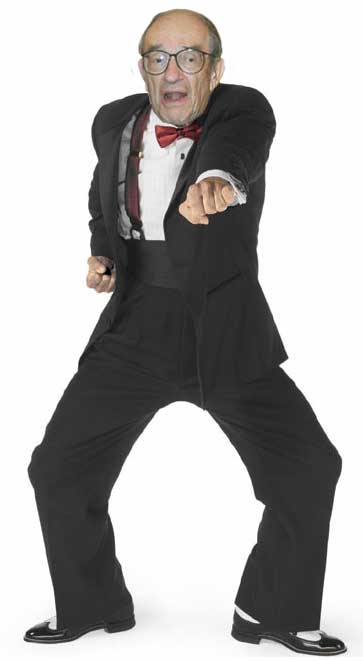
Today, former FED Chairman Greenspan decided to tell the world that China will have a big sell-off at some point. Well, no kidding! Anyone who follows economics and investing understands that China is due for a correction at some point. Did Greenspan really find it necessary to state the obvious as well?
However, I fail to see where this "big" correction will come from. If you take into account the P/E ratios over the projected five-year earnings growth rates in China, the stocks seem more appealing then those in the United States. Yet, Greenspan seems to ignore key numbers such as this all too often. To be critical of China, when you have been linked directly to many of the problems the US Economy currently faces, takes one arrogant and senile former economist and politician.
Carter and Greenspan need to go play a round of 18 and accept the fact that they failed during their tenures.
Wednesday, May 23, 2007
When will Carter and Greenspan just shutup?


Monday, May 14, 2007
(Chile)ng Economic Trials
In a recent Wall Street Journal column, a reporter chronicled the upcoming problems the Chilean economy faces. Like several other developing nations, Chile's economy seems to have become over-reliant on a single industry. In this specific case, Chile's recent economic boom has been fueled largely by mining commodities, especially considering how copper has tripled in the past 5 years or so.
However, Chile is dissimilar in the methods it has taken to combat the volatility derived from commodity markets by using investment techniques on a percentage of revenue generated from taxes on the economy. With tax revenues higher during years of commodity price increases, Chile has been able to develop a system that invests a percentage of taxes during this period into foreign investments such as government bonds. Although it would generally be wiser of them to place this money in equities, I applaud the finance and economics ministries for even coming up with such an idea that generates guaranteed return on money they don't need to spend.
By hedging against these fluctuations in Chile's economy, stability and long-term upward growth can more easily be secured. Many of the dividends and repayment of these funds will be invested into innovation so that the country becomes competitive in other sectors such as Technology, Financial Services and Consumer Products. All too often, developing countries focus on short-term profits, economic growth and end up spending instead of accruing or building their wealth. You will be hard pressed to find any country that has a better long-term economic strategy and focus on innovation and techonological improvement then Chile.
As with any government, the diffulty to balance the budget always poses a threat and concern among politicians and citizens. Chile's comprehension of the peaks and valleys associated with commodity dependence help create barriers against recession or stagflation. There are always issues and programs that need financial support, but tighter spending leads to a more balanced budget and higher levels of fiscal responsibility. Maybe US Politicians can learn something from our Chilean allies.
Note: GDP for Chile rises significantly after 2002.

Wednesday, May 9, 2007
Protectionism is a double-edged sword
Sen. Hilary Clinton continues to lead the protectionist rampage on the political front, she has yet to provide any hints as to her solutions to the various problems that are certain to arise should she win and enact her regulations. Protectionism has both positive and negative effects, the later of which Clinton ignores.
I doubt anyone questions the concern over the amount of outsourcing that has taken place since the early 1990s. Something needs to be done to revitalize the US economy, that isn't debatable. The methods for achieving the end means is where politicians and economists seem to differ.
Clinton tends to suggest that Protectionism will help keep jobs inside of US borders, lower the trade deficit and ultimately act beneficial to the overall economic well-being. She doesn't seem to realize that the trade deficit has no net affect on the United States. Entities and people trade, not countries. She should be more focused on U.S. GDP Growth rates because various factors influence trade, including tariffs, tax rates in respective countries and currency conversion rates.
If you look at Hilary's plan, implementing policies to force companies and Americans to buy home-grown products will certainly result in significant spikes in inflation. She doesn't seem to have any grasp of this concept. If strong tariffs or other protective measures are enacted, those goods that will be then produced by workers in America will most definitely be higher in price due to the wage and benefits difference.
Another key consequence on protectionism is a stronger US Dollar. Although some argue that would be beneficial for the United States and her citizens, this would only hold true when trading or converting currency or wealth with other countries. An inflated currency has proven to be part of the problem with outsourcing because a higher USD makes foreign imports cost less and become more attractive. This is a central factor in the massive import problem the US faces. Should the USD fall relative to the Asian currencies, which it still has yet to do, demand for US exports will rise dramatically.
The double edge sword comes into affect if the US Dollar were to fall too quickly, lowering the value of personal wealth and ultimately creating inflation simultaneously. By any means, the situation is complex and fragile, something Sen. Clinton needs to realize soon.
Friday, May 4, 2007
To be or not to be...Protectionist
There is a very fine line for the subject and cringe at those who believe it should be one extreme or the other. Senator Clinton has already established herself as a major protectionist, but I wonder what the other candidates stances are on this issue. If Clinton continues on this rampage, she will certainly alienate conservative or pro-business, pro-market Democrats as well as Republicans. During this time of economic prosperity and concerns over whether it will last, she might play herself into a defeat during the Democratic Primary.
With global trade and economic dependence, protectionism will be a key issue in the economic debates for both the primary and general elections. I'm interested to see how big pro-Wall Street politicians like Giuliani feel about this subject. Giuliani is by far the best candidate for Wall Street, or so those who work there believe. His extensive background in business and business law should certainly aid him throughout the Republican Primary. Whether the financial outlook looks bleak or solid, he can use his vast experience to persuade voters that his economic policy will either strengthen or maintain the future.
Whichever party wins, I hope Congress and the financial and economic experts in their cabinet and in key organizations (FED, FOMC, etc.) deter any candidate from going one way or the other. Too much protectionism, such as Sen. Clinton is proposing, will create a steep increase in inflation, decrease US exports as well as imports, and put a significant strain on our diplomatic relationships around the globe. By the same token, failure to create and maintain low-wage jobs will also create economic and social problems such as high unemployment and more dependence on government welfare and tax dollars. Additionally, Wal-Marts will continue to force their suppliers to venture outside of the US to keep up with the low prices they demand, directly affecting the job market.
Protectionism is a touchy subject, one that will not become any easier to figure out as the US economy becomes more reliant on globalization. Creating a limited protectionist platform sounds like the most effective route to counter this problem. Although it will create subjectivity, most who follow the economy can agree that neither extreme would ultimately be beneficial for America. Free trade needs to be emphasized, but some low taxes can offset enough jobs from being sent overseas.
Monday, April 30, 2007
The US is jealous of the French economy and lifestyle?
Although I find this laughable, bonehead NY Times Columnist Paul Krugman believes otherwise.
This is the same Paul Krugman who is predicting a massive recession. Please, Paul, for humor's sake, let's compare the U.S. to France.
GDP : US - $12.455 Trillion , France - $2.126 Trillion according to the IMF
If you take into account Purchasing Power Parity (PPP), the US is around $12.229 Trillion compared to France's $1.835.
Unemployment : US - 4.4%, France - 8.4%
Krugman is certainly a smart man. You don't go to the schools he attended if you aren't a bright guy. Somewhere along the line though, he was misguided and his economics and sense of what Americans want or feel seems to be way off. He continues to be a pessimist in the current economy while the U.S. outperforms France year after year.
Thursday, April 26, 2007
Grading the Democratic Debate (All Participats)
Hilary Clinton - D
Sen. Clinton did nothing short of disappoint me when I already have little respect and confidence in her. Instead of providing unique solutions to the questions and problems posed, she spend most of her air time lashing out on the Bush Administration. Although I am not a fan of many Bush policies, Clinton needed to use this time to impress those who aren't sold on her instead of using her breath for her personal vendetta.
Why does she despise the Bush Administration so much? Yes, he supposedly lied to the American public. But then again, didn't her own husband do the same? He turned out to be quite a solid President, despite failing to get most of his agenda passed through Congress. You have to assume that the White House received the same intelligence as Congress when this Iraq situation began, a war she voted for originally. She also voted for the invasion of Afghanistan, yet seems to regret most of her votes. Instead of blaming others for her mistakes and flawed political record, it would have been much nicer to see her come out firing with some good ideas and a sound political platform, neither of which we received from her tonight. She also showed her anti-free trade platform with her ideas of protectionism and regulation to run the country from the economy to health care. Clinton was even more vague on her health care plans then Obama, but at least she didn't say she wanted to hike taxes outright. Last I checked, we weren't in a communist country Senator Clinton!
Even worse, she still comes off negatively in many American's mind. I can't put my finger on exactly what it is, but she seems snobby, arrogant, and obnoxious. A poster on a forum I read suggested her tone as caustic and explained, " For starters, as a male, she comes off as the type of wife that most men don't want. Not that she is a strong female, that's cool, she just comes off as a caustic female. She just doesn't come off as a very nice lady. I don't think I'd want her in my circle of friends."
Maybe this criticism is unfair, but it seems apparent with 40%+ of the public disliking her, she has a real mountain to climb. Other candidates like Obama and Edwards seem to be more likable, similar to how the public perceived Bill Clinton and George W. Bush during campaigns. If the Dems want a real shot at winning, I'm convinced they need to run either Obama or Edwards instead of another Kerry or Gore (though he obviously could/should have won).
Barack Obama - A-/B+
Obama was solid tonight. He once again spoke elegantly and showed reasons why he could be a successful President. Instead of bashing the current administration, Obama gave some resounding solutions and unique, detailed initiatives he would like to help pass. Additionally, he seemed to have sound balance in his foreign policy stance. Although he wants a quick troop withdrawal, he understands the fundamental problems of the Middle East well and redirected an attack on a quote the moderator tried to tie onto Palestinian sympathy. Despite his campaign aimed further left then Clinton, he seems more eager to work with both sides of Congress and you get the feeling that the Republicans will have higher respect for him as President.
Obama was very vague on his funding of the proposed universal health care which he supports. Subsidies are a distinct possibility, as is the improvement of inefficient health care services. Although I like the idea of private health care due to the enormous amount of potential problems it might bring.
John Edwards - A-/B+
Overall, Edwards almost stole the show. Despite seemingly fewer questions, he actually answered more conservatively then either Obama or Clinton. That fact is interesting because he was supposed to be running the campaign furthest to the left. You have to wonder if his ads will focus on that profile while his debates and speeches will try and attract more moderate Dems and even liberal Republicans.
What really impressed me with Edwards was his composure. Calm and collected, he delivered detailed, well-pronounced (although he has that southern accent) replies. He reminded me some of Bill Clinton, although not quite as friendly. However, he still was much more appealing then Hilary in terms of vocals.
Edwards best answer of the night was his abortion response. Although Edwards clearly stated that he was pro-choice, he appealed towards the middle and even the Republican side of the line almost perfectly. He conceded that the issue is very personal and important to most voters, claiming we need to accept everyone's opinion on the situation. That type of sympathy appeal was not made by Clinton and might prove to come back and hurt her chances of ultimately winning both the Primary and Presidency, should she advance.
Had Edwards not suggested raising taxes to fund his universal health care program, he may have received a better grade. Once he uttered repealing the Bush tax cuts, it was a huge hit to his camp right away. With the economy and stock market performing like it is, tax increases could cause severe, detrimental damage.
Bill Richardson - B
Richardson looked goofy and almost as if he was trying too hard at times. His speaking was decent, but not good. His hand gestures were almost a little too overwhelming for me. He definitely gained credibility by standing up for his own personal views and opinions, not necessarily those associated with his party. He announced that he was pro-gun control, would use the military if necessary, and has been a known supply-sider when it comes to economics.
In addition, Richardson looked solid on some key aspects of current political issues. First, Richardson displayed his prowess and experience in foreign policy by answering several questions and making it a point to mention his work in that area of the political sphere. The moderator pointed out he received 4 Nobel Peace Prize nominations and Richardson himself further pointed out his familiarity with foreign diplomacy when referenced his work with North Korea.
Lastly, Richardson may be aided by his role as Governor instead of Senator. Like he vehemently explained, he deals with these decisions and issues first-hand, on a daily basis in New Mexico. That type of pressure and the need for quick, decisive action sometimes is harder for Senators since they are transitioning roles.
Joe Biden - D+
Biden did not leave much of a mark on this debate. He had a personal "attack" if you will that he failed to respond to, rendering him as defenseless. Unlike Obama and even Clinton to some extent, Biden didn't defend his name. Although he isn't really a lasting 2008 candidate, moves like that might cost him in the future. Also in the last half, like Hilary, he focused more on attacking the Bush Administration instead of responding with thorough, sound answers.
Dennis Kucinich - D
Give me a break. This guy might be the biggest pushover in the history of Washington. How he landed a seat is beyond me. He was basically against anything militaristic in nature. He solely desires to rely on diplomacy to solve foreign issues. Apparently Rep. Kucinich doesn't understand that terrorists do not negotiate and even if they do, they cannot be trusted. He sounds like the type of politicians who belong in France. Appeasement is not the answer, just ask those French cowards. Germany used them for years in the early half of the 19th Century. The leaders we are dealing with in North Korea, Iran and terrorist organizations are replicas of Hitler. We can all thank god that Mr. Kucinich won't be the President anytime in his life, except maybe for a local committee.
Mike Gravel - F
Who is this guy? I can honestly say that Sen. Gravel would not have been elected in any other state except Alaska. They must really be desperate or maybe they don't care much up there. Instead of answering questions, Gravel bashed his counterparts for this and that. On top of that, he yelled the moderator for asking too few questions to him, proclaiming his seniority. Maybe if he realized how unimportant he is to the Democratic Presidential Campaign he would understand. Gravel is an absolute joke.
Chris Dodd - B
Dodd has some good experience at it showed. For someone who has been in the political realm as long as he has, public speaking should be easy and it showed. He has some sound responses to questions and actually solidified himself as a leader in the Democratic party. He was for civil unions, but not gay marriage.
