

I don't know what it is with former famous political leaders, but they seem to be having a problem keeping their mouths closed. Just a few days ago, former President Jimmy Carter went off as saying "the current administration is the worst in history". Later, Carter claimed he was only referring to the Bush Administration's foreign policy.
But, like Greenspan, what good did these comments really do for the country? Confidence is already near all-time lows, set when guess who was President-Carter himself. A vast majority of Americans in both parties know how poorly Bush has done in respect to foreign policy, so why does the former maligned leader feel the need to state the obvious? Considering his track record, Carter has no room to criticize or talk.
Today, former FED Chairman Greenspan decided to tell the world that China will have a big sell-off at some point. Well, no kidding! Anyone who follows economics and investing understands that China is due for a correction at some point. Did Greenspan really find it necessary to state the obvious as well?
However, I fail to see where this "big" correction will come from. If you take into account the P/E ratios over the projected five-year earnings growth rates in China, the stocks seem more appealing then those in the United States. Yet, Greenspan seems to ignore key numbers such as this all too often. To be critical of China, when you have been linked directly to many of the problems the US Economy currently faces, takes one arrogant and senile former economist and politician.
Carter and Greenspan need to go play a round of 18 and accept the fact that they failed during their tenures.
Wednesday, May 23, 2007
When will Carter and Greenspan just shutup?


Monday, April 30, 2007
China learning well from U.S. Economists
As one of the fastest growing economies in the world and one of the largest, China could easily be arrogant, unresponsive and even disrepectful to the U.S., a former Cold War nemesis. That does not seem to be the case however, considering the trend of decisions made by the Chinese version of the FED, with counsel from U.S. bankers and economists.
The Wall Street Journal reported today that China lifted bank reserves in an attempt to help control growth. Although growth in double digits seems very appealing to most investors, the Chinese Central Bank and U.S. economists realize it may actually pose a huge recession threat down the road. With a lesson learned from the U.S. housing bubble, created by Alan Greenspan's flawed monetary policy, China is attempting to prepare itself and provide a soft-landing to the world's second largest economy (GDP using PPP).
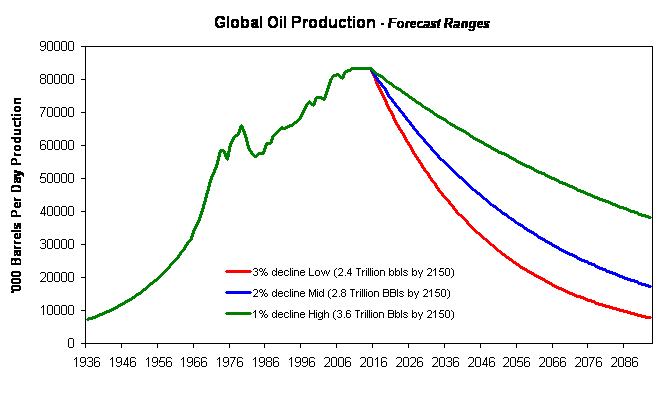
Though the graph suggests no recession problems, you can be sure that growth will be tough to sustain at such a high rate. If China can curb its growth now at 8-9%, it will be able to sustain it for a much longer period of time with less volatility, such as the graph suggests. However, if they continue growing by double digits, the threat of a bubble burst is likely, one that could ultimately ruin the economy or set Chinese progress back severeal years.
Friday, April 27, 2007
Economic Worries for the U.S. Economy
Despite weak GDP performance in the first quarter of 2008, the equity markets continued their climb today with the Dow closing at yet another record high. All of this came amidst talk of a potential recession, a weak Dollar, and declining markets abroad. With this seemingly unstoppable run continuing, there are still several factors that worry me about the current economy.
First off, let me make it crystal clear that I am still Bullish on the stock market and economy in the long run. However, there are too many factors signaling a struggle ahead. Lets begin with the inflationary pressure on the economy. The CPI and PCE both rose to suggest higher prices across the broad economy. Although prices in commodities continue to increase, I do not see these increases in the CPI and PCE repeating themselves for more then a few months. Commodity prices are being driven by international demand and growth, not domestic. Therefore, rising commodity costs are not being translated into actual inflation for most ordinary Americans except in the form of gasoline.
Another concern I have relates to the Fed's competence and the inverted yield curve it created. Greenspan is out, so I will wait to see how Bernake handles a fragile situation. Many bears argue we have never seen an inverted yield curve without a recession following. This fact is entirely accurate, yet may not be in this unique situation. The Fed mishandled rates in 2002-3 by sending them too low, creating the massive housing boom. Without properly limiting growth and speculation in the housing sector, the expected happened in when the bubble burst. Sub-prime spillover and sharp declines in housing prices and sales are not what worries me though. The drastic lowering of interest rates was overdone compared to inflation numbers. Additionally, it hurt the USD, which dropped steeply between 2002-4.
In an attempt to try and generate a perception of normal inflation, the Fed has increased the amount of money it prints to provide a short-term wealth. This will only worsen inflation in the long run as prices of goods and service remain constant the value of the dollar drops even more. To help control inflation, the Fed keeps focusing on raising the short-term FF rate instead of both the short and long or just the long. This has created the inverted yield curve, which undervalues long-term lending. Why would anyone borrow for the long term when they can get short-term returns at higher rates? Not to mention, it makes the U.S. pay back larger debts sooner rather then later.
Lastly, corporate profit records of late have been derived from operations abroad, not domestically. These profits are good since the companies making them are many of those headquartered in America. But, the income and revenues being attained globablly does not help our economy in terms of GDP, employment, and other factors. When you consider most of the returns on the investments made internationally stay outside the U.S. boarders, it really has no net affect on our country except for aiding to drive the equity markets higher. Also, if you consider the gains of the Euro and Pound against the USD, it makes sense that these companies continue to report record earnings. It must be near impossible for Wall Street to predict income and revenues generate across the world, let alone exchange rates to translate those earnings and sales.
These are just some things to consider in the short-term. Once GDP growth heads back towards 3-4% in the 4th Quarter, you can be assured that a new big rally will begin. Unless, of course, the current rally just never dies. As Larry Kudlow says, "It's the greatest story never told" and I expect many Americans to continue to reap benefits of investing in stocks, mutual funds and ETFs.
Tuesday, April 24, 2007
Did Alan Greenspan Ruin the Current U.S. Economy?
During the tenure of Alan Greenspan, from 1987-2006, the
There is certainly no question that Mr. Greenspan maintained stability in the economy from his entrance during Reagan's Presidency to the end of
Despite obvious flaws in Greenspan's policies, he won't get all of the blame. Natural factors, decisions of other leaders, and actions taken by other countries or parties outside of Greenspan's control played a significant role. But, these outside factors surely could have been combated in a more effective manner by our former head of the Federal Reserve.
The 2008 election is critical to the importance of our free market, capitalistic economy. Some Democratic Presidential and Congressional candidates such as Hilary Clinton are proposing protectionism to try and combat outsourcing and trade deficits. This type of legislation will surely put our economy into a slump. Any economist who completely dismisses outsourcing as at least a minor problem does not view economics in an objective light. However, outsourcing really stems from our protectionist approach to the U.S. Dollar in the late 90s and early part of this decade. High costs for merchandise in the
Along with outsourcing, Greenspan's short-term bolstering of the strength for the U.S. Dollar has contributed to its current struggles. Money supply was not properly utilized to preserve a stable Dollar, as it has shown with the decline against the Euro from 1.12USD/1E to .75USD/1E. The Dollar's substantial drop has occurred during times of economic prosperity across the globe, including both the
Current threats of recession are also correlated to Greenspan's poor handling of the Fed's interest rate control. Following the recession in our economy, the Fed made multiple, massive rate cuts. These cuts were detrimental for two reasons: they caused the housing bubble of 2003-6 and created an inverted yield curve for treasury bonds. With interest rate cuts in 2002 and 2003 to ultra-low levels, the Fed produced a housing boom that is still affecting us today. By over-cutting, Greenspan generated too much liquidity for the marketplace, thus ensuring heavy asset investment of all sorts. The problem with this massive amount of liquidity was that it was coupled with extremely low interest rates. Housing was the obvious choice for investors and the immediate boom that followed was one of unsustainable proportions. I thought that the Fed was supposed to curb growth in order to control volatility, peaks and troughs, and ultimately enable growth longevity. Apparently I was wrong.
Another key consequence of cutting rates too low was the mishandling of temporary debt vs. long-term debt. One of the main reasons the U.S. Treasuries are considered sound investments is not only because of the "guaranteed return", but also the decency of that return. However, when Greenspan cut rates, they targeted long-term rates in too many cases. This poor action spawned an environment where short-term rates actually exceed long-term returns. Why would an investor tie his capital up longer if he can't get a higher rate? While Sen. Clinton preaches her worries about
As if his horrible policies weren't enough, Greenspan came out not long after the huge February correction and predicted a recession was "likely". Despite his retiree status, Greenspan sent more fear through the minds of consumers, investors, and businesses alike. Conveniently, after the stock market (and economy to an extent) rebounded and stayed its upward course, Greenspan came out again and denounced his previous prediction.
Hopefully that was the last we will hear from Greenspan, unfortunately, I wouldn’t count on it.
